Now Reading: Loving Kindness Meditation: Step-by-Step Guide with Free Script
-
01
Loving Kindness Meditation: Step-by-Step Guide with Free Script
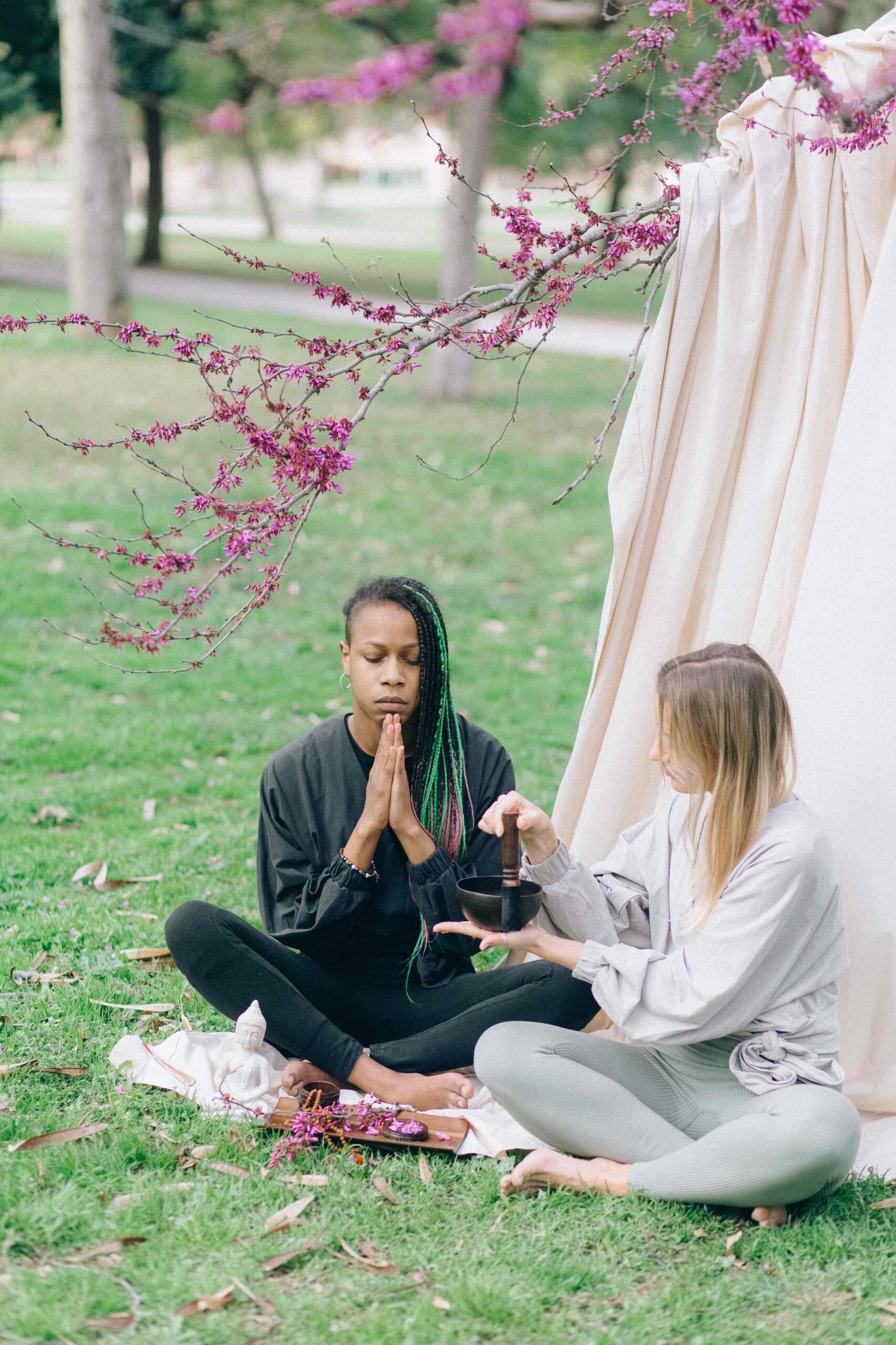
Loving Kindness meditation means quietly wishing goodwill to yourself and others. To try it, sit comfortably, think of someone you can easily wish well, and repeat a few kind phrases. The free script and guided audio below will guide you through a short session.
You might try this after a tense moment, during a quiet time, or simply because you feel like it. You don’t need to be in a loving mood or try to turn a bad day into a good one before you start.
This practice asks you to focus your attention: make a wish, notice if your mind wanders, and then choose whether to bring it back to the words.
What is loving kindness meditation (or metta)?
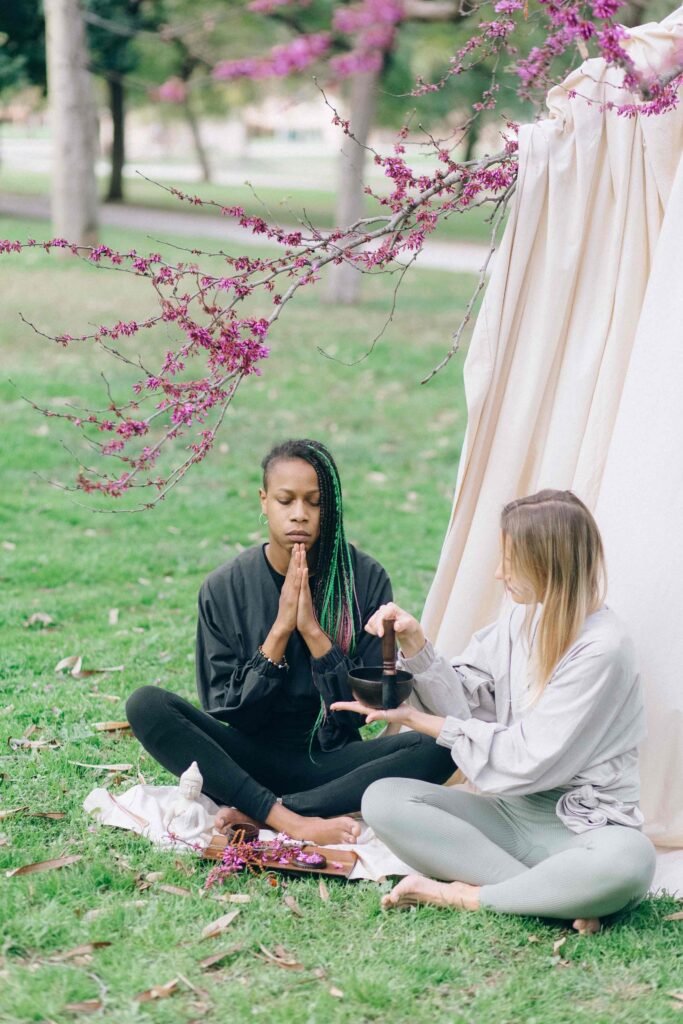
Loving kindness meditation has roots in Buddhist traditions, where it’s called metta. In a guided practice by Buddhist teacher Anushka Fernandopulle for UC Berkeley’s Greater Good Science Center, the focus is on building the intention to wish well for others and yourself.
Some practices start with yourself. Others begin with someone it’s easier to wish well, then gradually include more people. You can use a secular version and still recognize its origins.
A phrase is a wish, not a statement about how things are. Saying “May I have support when I need it” can feel more honest than telling yourself everything is fine. You can wish someone well without agreeing with everything they do or being available to them.
How is it any different from mindfulness or affirmations?
| Practice | What you focus on | A simple example |
| Mindfulness of breathing | Noticing the breath and returning attention when it wanders | Observe the next comfortable breath without changing it |
| Loving kindness meditation | Deliberately offering goodwill | Silently wish someone a little room to rest |
| An affirmation | Repeating a chosen statement | Remind yourself that you can take one manageable next step |
These are just some of the descriptions; the actual practices can overlap. You could of course go with a completely different activity. Our everyday emotional well-being activities guide contains options such as reflective writing and spending time with others.
How do you actually go about doing loving kindness meditation step by step?
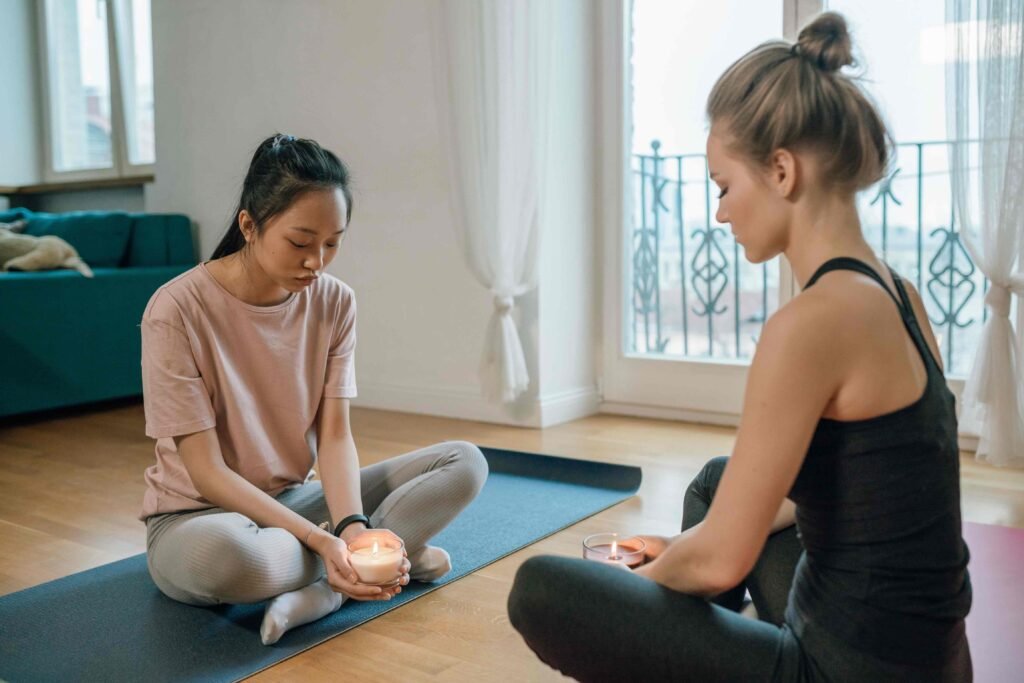
For a first go, just set aside a few unhurried minutes. A normal chair will do. The sequence below is a basic option, not a set order or a clinical protocol.
1. Choose a supported position
Sit, relax or use whatever position is most comfortable for your body. Keep your eyes open if you like. Your breathing should be relaxed and comfortable, you don’t need to be doing breath holds or any particular rhythm or pattern of breathing at all.
If looking inwards feels uncomfortable then just look at an object in the room or notice the surface of whatever you’re holding in your hands. You can always stop the session at any point.
2. Choose someone uncomplicated to begin with
Think of a friend, a supportive person, or an animal you care about. Think of someone whose presence is fairly easy to contemplate at the moment. You don’t need to visualise their face at all really: a name or a fleeting thought will be sufficient.
If you can’t think of anyone in particular then you can simply start with a general wish that people have the support they need. There’s no need to find the ideal person.
3. Offer a few wishes at a comfortable pace
Try the original phrases used in the script below:
- May your day be kind.
- May you have support when you need it.
- May you find a little room to rest.
Leave a little silence between the phrases or just repeat one of them. You can of course tweak the wording to suit your own language and beliefs. If you lose your place just start with the one you remember.
4. Include yourself when you want to
Change “your” to “my” or use your own name. You could also just stick with first person for the whole session if directing the goodwill towards yourself feels a bit awkward today.
This is an invitation to include yourself, not a test of your kindness. You don’t need to repeat a phrase until you’re convinced by it.
5. Widen the circle only if it feels useful
You might pick a fairly familiar person you don’t actually know that well (someone you see quite regularly on the commute, for instance). Or you could use “we” to include yourself and other people.
Some of the traditional sequences involve a difficult person. You could well skip that stage. The beginner script doesn’t ask you to visualise someone who’s harmed you, to forgive them or to change a protective boundary.
6. Finish by noticing the room
Let the words stop. Notice a sound, the light, the chair under you. Give yourself a moment before you go on and decide whether you want to use that same sequence again.
Free loving kindness meditation script
This is the original secular beginner script (not a translation of any traditional text). Read it slowly, record it in your own voice or use the accompanying audio. The pauses are suggestions and every stage is optional.
The text below is the full transcript of the practice from the downloadable audio.
1. Arrive where you are
Choose a position that you feel is supported. Have your hands in some comfortable position. You can leave your eyes open and just look at some ordinary object in the room.
Just be aware of where your body is in relation to the chair or the floor. Let your breathing be as it will be. There’s nothing at all you need to be doing in those few minutes. You can stop or pause at any time you like.
Pause for approximately 5 seconds.
2. Begin with someone easy to wish well
Think of a person or animal that you can readily extend goodwill to. A name or indeed just a thought is sufficient; you don’t need to have a clear image in your mind.
Offer those wishes quietly, with a little space between them.
May your day be filled with kindness. May you have the support you need. May you find a little space to rest.
You don’t need to check that the words create a feeling. For the purposes of this exercise you are simply offering the words.
Pause for approximately 8 seconds.
3. Include yourself, if that feels workable
See if you can find a place for yourself in those wishes. You can use your own name or just quietly say ‘I’. If this part is at all uncomfortable then just stay with the person or animal that you selected.
May my day be filled with kindness. May I have support when I need it. May I find a little space to rest.
A hesitant or unsure response doesn’t need fixing. Go back to one phrase if you’d like.
Pause for approximately 8 seconds.
4. Let the circle widen, or stay where you are
If you want to, include someone you know fairly well but not actually that well. Or you can just keep it all first person. There’s no need at all to bring in a difficult relationship.
May our days be filled with kindness. May we have the support we need. May we have a little space to rest.
Pause for approximately 8 seconds.
5. Return to the room
Let the phrases end. Hear a sound nearby and be aware of the surface you’re on. Look around at your own pace.
Choose what comes next: perhaps a drink of water, perhaps a stretch, perhaps just go back to your day. That’s it really. The practice can finish there.
Pause for approximately 2 seconds.
Download the printable script
The two page printable keeps the practice distinct from the rest of the article so you can just read it off the screen. Can be printed in black and white if you like.
What benefits does the research point to?
Research does give us some reason to look at loving kindness meditation as a well-being practice, it doesn’t however promise that you’ll have any particular feeling after a short session.
A 2008 randomised study by Barbara Fredrickson and colleagues involved 139 working adults, half of whom were assigned to start out with loving kindness meditation. The researchers found increases over time in daily positive emotions in the group that did the meditation. That was a study of that particular programme with that particular population, not a study of the script on this page.
The NCCIH meditation overview also points out that research across the various meditation approaches can be very preliminary, very difficult to compare or potentially overly optimistic in its interpretation. You can’t just take the results of a mindfulness course and apply those to every form of meditation.
Treat this as something you can go and try for yourself. It’s not a treatment for depression, it’s not a treatment for anxiety or any other health condition and it in no way replaces professional care.
What if the phrases come across as awkward, disruptive or offensive?
Awkwardness doesn’t need a complex fix. You can just shorten it, use your own name or keep one phrase that’s basically honest. A wish can still be a wish even if there’s no warmth to go with it.
If you’re distracted by an errand or a message, ask yourself whether it actually needs attending to. You can go back to the phrase, write down the task for later or just call it a day. Completing a meditation is not more important than actually dealing with a real need.
If you’d prefer to reflect in writing then pick one of the daily journal prompts below after the practice. For instance: “What kind of help is easiest for me to accept?” One sentence is all that is required; you don’t need to go on to analyse the whole session.
If it’s upsetting just stop. Open your eyes if they’re shut, look around and get back into some ordinary activity that you can actually do. Meditation isn’t for everyone and there’s absolutely no point in pushing through to the end of this script if it’s causing you distress.
How can you fit it into an ordinary week?
Try one session at a time that you can realistically protect (perhaps after you’ve put away your work things or before you make a cup of tea). Then ask yourself whether the timing, the words and the format were right for you.
If it’s too much effort to read and remember the phrases then go for the audio. If the voice is a bit much then have the printable close by. If the whole thing seems too long then just make one wish to one person and stop there.
The wider MindMerge Wellness library contains other everyday wellness ideas in case this practice isn’t quite for you. You don’t necessarily need to add another practice on to your routine just because you’ve come across it.
Common questions about loving kindness meditation
Do you have to feel love for the practice to count?
No particular emotion is required in the performance of the exercise. You are simply choosing to offer goodwill. You may well feel warm, you may feel bored, you may feel a little hesitant, you may feel nothing at all. None of those things are in any way a score.
Do you have to forgive a difficult person?
No, you can practice entirely on your own, with someone supportive or just with the general wish for others. Goodwill doesn’t require contact, reconciliation or overlooking of harmful behaviour.
Can you change the phrases?
Yes. Pick the language you’re comfortable with and can understand. “May I have assistance with what I’m carrying” might be a better phrase for you than a general request for happiness. You can of course omit any phrase that doesn’t suit you.
How long should a beginner practice?
There is no mandated session length for trying out this script. A few minutes may be a perfectly practical starting point or you could just go with one stage. These are purely editorial suggestions as to format, not a proven minimum for any health benefit.
When would you call in the professionals?
NCCIH does not recommend using meditation as a substitute for conventional medical care or in place of seeing a doctor. If meditation is leaving you feeling distressed or if your emotional problems are impacting your day-to-day life then you should talk to a qualified professional about the appropriate form of support. For instruction in the practice itself, ask the teacher about their training and how they will be adapting the session for a beginner.
You can end today’s practice with one simple wish, then move on to whatever comes next in your day.
Sources
- Greater Good Science Center, UC Berkeley. Happiness Break: Wishing Others Well, With Anushka Fernandopulle. June 15, 2023. Teacher-led explanation of metta and its Buddhist context. The script in this article is original editorial material, not a reproduction of that recording.
- Fredrickson, B. L., Cohn, M. A., Coffey, K. A., Pek, J., and Finkel, S. M. Open hearts build lives: Positive emotions, induced through loving-kindness meditation, build consequential personal resources. Journal of Personality and Social Psychology, 95(5), 1045-1062 (2008). DOI: 10.1037/a0013262. Study details verified against the PubMed abstract; no treatment claim is made here.
- National Center for Complementary and Integrative Health. Meditation and Mindfulness: Effectiveness and Safety. Used for research limitations, possible negative experiences, and guidance on seeking care. Sources accessed October 30, 2026.

Hi, I’m Brittany Larsen, a passionate blogger and content creator dedicated to writing meaningful and engaging articles. I specialize in topics like mental health, wellness, and personal development, aiming to inspire and empower my readers through relatable stories and practical advice.