Now Reading: Emotional Release Yoga Poses: Gentle Movements to Release Stress
-
01
Emotional Release Yoga Poses: Gentle Movements to Release Stress
Introduction
Emotions are not just in our minds—they can show up in our bodies as well. Stress, anxiety, sadness, and tension often build up in our muscles and joints without us noticing. That’s why many people use yoga to reconnect with their bodies and let go of emotional stress. Doing emotional release yoga poses can help you relax, breathe deeply, and work through emotions in a healthy way.
Yoga uses mindfulness, slow movement, and focused breathing. Together, these help calm your nervous system and make room for emotional healing. Many therapists and wellness experts now suggest emotional release yoga poses for managing stress and supporting emotional health.
Research supports this connection. A study published in Frontiers in Psychiatry found that yoga practices significantly reduce symptoms of anxiety, depression, and emotional distress. You can explore the research here: https://www.frontiersin.org/articles/10.3389/fpsyt.2019.00473.
Learning how emotional release yoga poses work can help you use yoga as a helpful tool for mental health and emotional balance.
How Yoga Helps Release Stored Emotions
When we feel stress or emotional pain, our bodies hold onto tension. Muscles get tight, our breathing gets shallow, and our posture can change. This tension can stay in the body for a long time.
Doing emotional release yoga poses helps relax these tense areas. Slow stretches and deep breathing signal to your body that it’s safe to let go and relax.
Yoga teachers often say that certain parts of the body hold emotional tension. For example, the hips can store stress and unresolved feelings. The chest may tighten with anxiety, and the shoulders often carry emotional weight.
By practicing emotional release yoga poses regularly, you can gently let go of tension and reconnect with both your body and your emotions.
Why Emotional Release Yoga Poses Work
There is growing scientific evidence explaining why emotional release yoga poses can improve emotional health.
Yoga encourages slow breathing, which helps regulate the nervous system. Deep breathing reduces cortisol, the hormone associated with stress. Lower cortisol levels allow the body to relax and recover.
Yoga also helps you practice mindfulness. When you pay attention to your breath and movements, you become more aware of your emotions. This awareness makes it easier to work through your feelings instead of pushing them away.
According to Harvard Health Publishing, mind-body practices like yoga can improve mood and reduce stress by influencing brain areas responsible for emotional regulation. Learn more here: https://www.health.harvard.edu.
Because of these benefits, many therapists add emotional release yoga poses to trauma-informed wellness routines.
10 Emotional Release Yoga Poses to Try
Many yoga postures help release emotional tension. The following emotional release yoga poses are gentle and accessible for beginners.
Child’s Pose (Balasana)
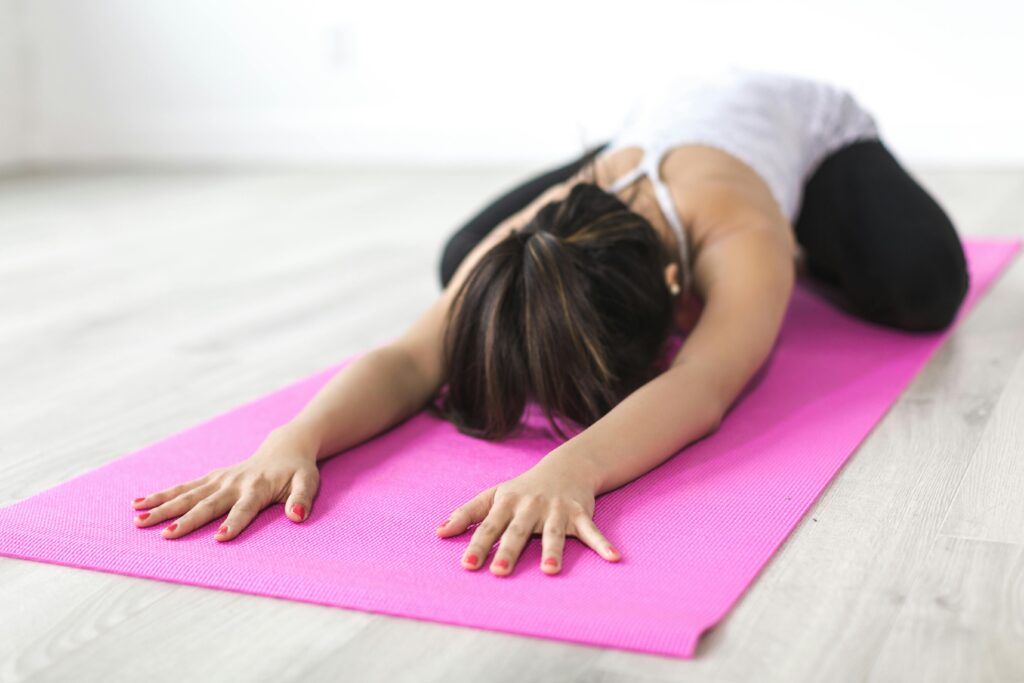
Child’s Pose is one of the most calming yoga poses for emotional release. In this pose, you fold forward and rest your forehead on the mat.
This pose helps you relax and feel emotionally safe. The gentle pressure on your belly also supports deep breathing.
Many people feel immediate relief when practicing this pose for several minutes.
Pigeon Pose
Pigeon Pose is one of the most well-known emotional release yoga poses because it deeply stretches the hips. Since emotional tension often accumulates in the hips, this pose can feel intense but healing.
Moving slowly in this pose helps your body let go of tightness and stress in your lower body.
Reclined Bound Angle Pose
Reclined Bound Angle Pose opens the hips and chest while allowing the body to rest comfortably. Many people place pillows under their knees for support.
This posture encourages deep breathing and relaxation, making it one of the most soothing emotional release yoga poses.
Standing Forward Fold
Standing Forward Fold helps calm your nervous system. When you fold forward and let your head drop below your heart, it encourages relaxation.
Forward folds are especially helpful for easing anxiety and mental tension.
Legs Up the Wall (Viparita Karani)
Legs Up the Wall is a gentle restorative posture. In this pose, you lie on your back with your legs resting against a wall.
This pose improves circulation and helps your body relax deeply. Many yoga therapists say it’s one of the most restorative poses for emotional release.
Supine Twist
Supine twists help release tension in your spine and shoulders. These gentle twists also massage your organs and encourage deep breathing.
These benefits make twists great yoga poses for relieving stress.
Supported Bridge Pose
Supported Bridge Pose opens your chest and heart area, where people often hold emotional tension.
Opening the chest encourages emotional vulnerability and release. This is why many yoga teachers include this pose in emotional release yoga poses sequences.
Supported Fish Pose
Supported Fish Pose stretches your chest and throat. This pose encourages deep breathing and helps you feel more open emotionally.
Since it stretches the heart center, this pose is often used for emotional healing.
Reclined Figure Four Pose
This gentle hip opener stretches the outer hips and lower back. The slow stretch helps release tension built up from long periods of sitting or emotional stress.
It’s another helpful pose to add to your emotional release yoga routine.
Savasana (Final Relaxation)
Savasana is the final relaxation pose practiced at the end of yoga sessions. In this pose, the body lies still while the mind relaxes.
Even though it looks simple, Savasana is one of the most powerful yoga poses for emotional release. It gives your body time to absorb the benefits of your practice.
Tips for Practicing Emotional Release Yoga Safely.
Emotional release yoga should always feel safe and supportive. Move slowly and don’t push your body into any position that feels uncomfortable.ns.
Props like pillows, yoga blocks, or blankets can support your body during deeper stretches. These tools make emotional release yoga poses easier for beginners.
Keep your breath slow and deep as you practice. If you feel strong emotions, pause and take a few gentle breaths.
Trauma-informed yoga teachers often remind students to be patient and kind to themselves during emotional release yoga.
Emotional Release Yoga and Mental Health
People are paying more attention to how yoga supports emotional wellness. Mind-body practices like yoga help you manage emotions and build resilience.
According to the National Institute of Mental Health, physical movement and mindfulness practices can support emotional regulation and stress reduction. Learn more here: https://www.nimh.nih.gov.
Practicing emotional release yoga poses regularly can complement therapy, meditation, and other mental health practices.
For many, yoga is a safe space to reconnect with their bodies and gently process emotions.
Final Thoughts on Emotional Release Yoga Poses
Emotions are a natural part of being human. However, when stress and tension accumulate in the body, they can affect both mental and physical health.
Practicing emotional release yoga poses offers a gentle way to release stored tension and reconnect with inner calm. Through slow breathing, mindful movement, and relaxation, yoga helps people create space for emotional healing.
Even practicing a few emotional release yoga poses each day can support relaxation, improve mood, and strengthen emotional resilience.
Over time, these practices can become powerful tools to help you maintain mental wellness and emotional balance.
Helpful Video
Here’s a beginner-friendly emotional release yoga session from Yoga With Adriene, a trusted yoga teacher:
References
Frontiers in Psychiatry – Yoga and Mental Health
https://www.frontiersin.org/articles/10.3389/fpsyt.2019.00473
Harvard Health Publishing – Yoga for Stress Reduction
https://www.health.harvard.edu
National Institute of Mental Health – Stress and Mental Health
https://www.nimh.nih.gov
Yoga Journal – Emotional Benefits of Yoga
https://www.yogajournal.com

Hi, I’m Brittany Larsen, a passionate blogger and content creator dedicated to writing meaningful and engaging articles. I specialize in topics like mental health, wellness, and personal development, aiming to inspire and empower my readers through relatable stories and practical advice.