Now Reading: Mindfulness Exercises for Workplace Anxiety: Simple Tools to Stay Calm and Focused at Work
-
01
Mindfulness Exercises for Workplace Anxiety: Simple Tools to Stay Calm and Focused at Work
Mindfulness Exercises for Workplace Anxiety: Simple Tools to Stay Calm and Focused at Work

Workplace anxiety is more common than many people think. Deadlines, meetings, high expectations, and constant communication can leave us feeling overwhelmed and mentally drained. But there is a solution that’s simple, effective, and doesn’t require special tools—mindfulness.
In this article, we explore powerful mindfulness exercises for workplace anxiety that take just a few minutes, yet help reduce stress, boost focus, and support your mental well-being during the busiest workdays.
What Is Workplace Anxiety?
Workplace anxiety is more than just feeling nervous before a presentation. It includes constant worry, restlessness, difficulty concentrating, and even physical symptoms like headaches or muscle tension. According to the American Institute of Stress, 83% of U.S. workers suffer from work-related stress, and 25% say work is their number one source of anxiety (stress.org, 2022).
Over time, this kind of pressure affects job performance, relationships with coworkers, and overall health.
How Mindfulness Helps Manage Workplace Anxiety
Mindfulness means paying attention to the present moment without judgment. Practicing mindfulness helps reduce reactivity, improves emotional awareness, and creates mental space to respond calmly to stressors.
Research from Harvard University shows that mindfulness training improves attention and reduces stress levels, even in high-pressure environments (Harvard Gazette, 2011).
By using mindfulness exercises for workplace anxiety, you can shift from feeling overwhelmed to feeling in control, no matter how busy your day gets.
8 Simple Mindfulness Exercises for Workplace Anxiety
These mindfulness techniques are easy to do right at your desk, during a break, or even in a meeting. No special equipment needed—just your breath, body, and attention.
1. Two-Minute Breath Break
When anxiety hits, the first thing to do is pause and breathe.
How to do it:
- Sit comfortably with your feet flat on the floor
- Close your eyes or soften your gaze
- Inhale deeply through your nose for 4 seconds
- Hold for 2 seconds
- Exhale slowly through your mouth for 6 seconds
- Repeat for two minutes
This breathing pattern activates the parasympathetic nervous system, calming your body and mind.
2. Mindful Email Reading
Instead of rushing through emails, try reading one mindfully.
Steps:
- Take a breath before opening your inbox
- Focus on one email
- Read slowly, noticing your physical reactions (tight shoulders, fast heartbeat)
- Respond only after taking a calming breath
This mindful pause can prevent reactive responses and reduce mental clutter.
3. Body Scan at Your Desk
Anxiety often shows up as tension in the body. A quick body scan helps you reconnect with yourself and release stress.
Try this:
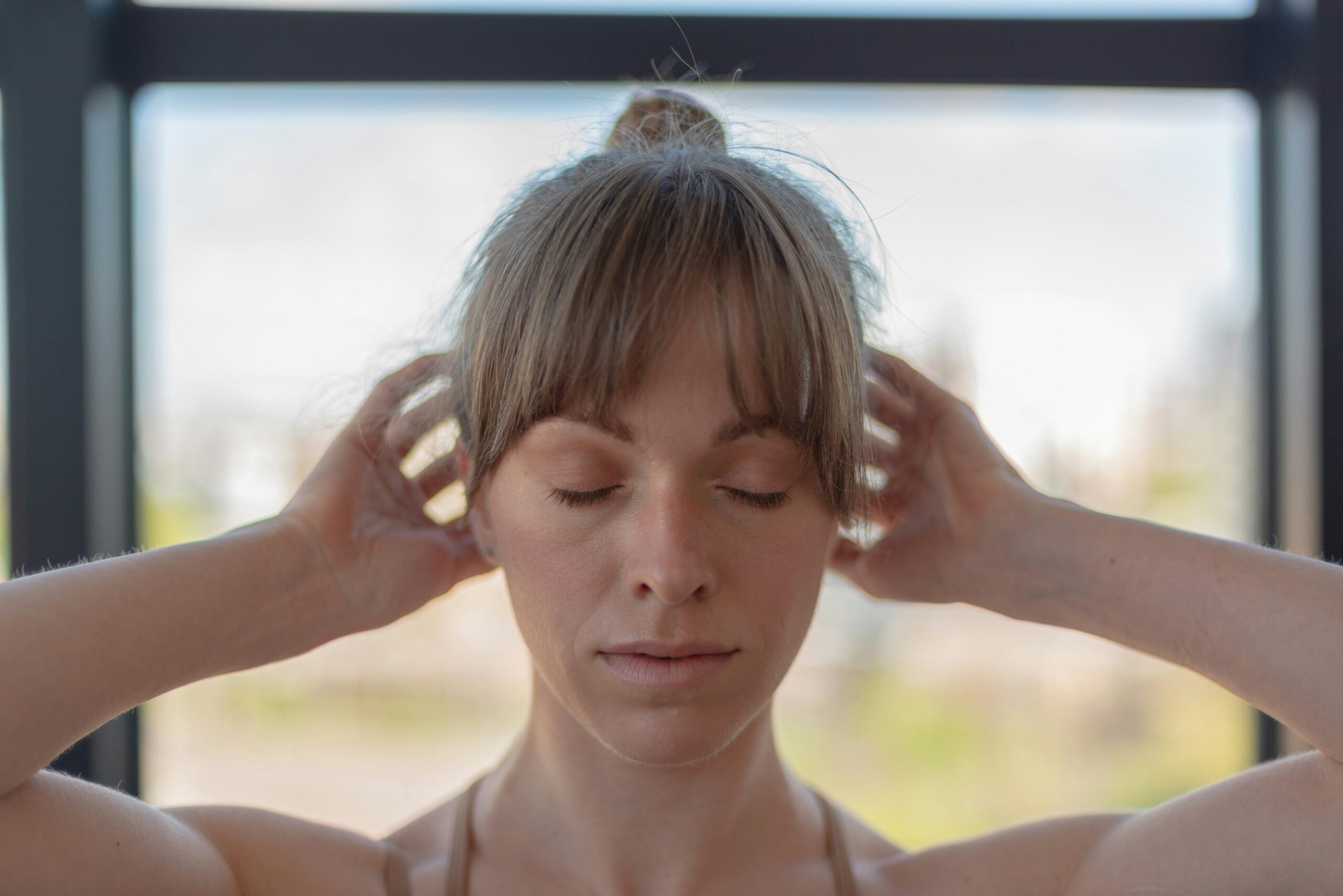
- Close your eyes for 3 minutes
- Start at your toes and mentally scan upward
- Notice any areas of tension (jaw, shoulders, back)
- Breathe into those areas and gently relax
This is one of the most effective mindfulness exercises for workplace anxiety and can be done anytime you feel overwhelmed.
4. Mindful Coffee or Tea Break
Turn your daily coffee or tea break into a moment of calm.
Practice:
- Hold your cup and feel its warmth
- Notice the aroma before taking a sip
- Drink slowly, fully experiencing the taste and texture
- Stay present throughout
Slowing down simple routines helps ground your thoughts and ease anxiety.
5. One-Minute Desk Meditation
If you’re short on time, even a single minute can help.
Instructions:
- Sit tall with a straight spine
- Close your eyes and place your hands on your lap
- Focus only on your breath
- Let go of thoughts as they come—gently bring your focus back
This tiny pocket of mindfulness can reset your mental energy.
6. Gratitude Note
Shifting your mindset from stress to gratitude changes your brain’s chemistry.
Do this once a day:
- Write down one thing you’re grateful for at work (a coworker, accomplishment, or moment)
- Reflect on why it matters
Gratitude increases positive emotions and reduces anxiety—according to a study in Psychology Today, it can lower stress by 23% (psychologytoday.com).

7. Single-Tasking Challenge
Multitasking increases stress and lowers productivity. Instead, choose one task and do it mindfully.
Steps:
- Set a timer for 15–30 minutes
- Focus on one job only—no emails, phone, or distractions
- Notice when your mind wanders, and gently refocus
Practicing single-tasking improves clarity, confidence, and calm.
8. End-of-Day Reset
Before leaving work or logging off, take 2–3 minutes to reset your mind.
Try this:
- Reflect on what you accomplished
- Let go of anything unfinished
- Take 5 slow, deep breaths
- Say to yourself: “I did my best today.”
This daily closure creates mental separation between work and personal life.
Making Mindfulness a Workplace Habit
Consistency matters more than duration. Here’s how to build mindfulness into your workday:
- Set calendar reminders: Block short “mindfulness moments”
- Use apps: Try Calm, Headspace, or Insight Timer for guided workplace sessions
- Create a mindful workspace: Keep your desk tidy, use calming visuals, or keep a small plant
- Start small: Don’t try to do it all at once. Begin with one technique a day
Over time, these small acts add up and become a natural part of your routine.
Final Thoughts: Calm Is Just a Breath Away
Workplace anxiety doesn’t need to control your day. With simple and intentional mindfulness exercises for workplace anxiety, you can find moments of peace—even in the busiest environment.
The key is to pause, breathe, and pay attention. Whether it’s a short breath break, a mindful sip of coffee, or a few seconds of stillness before a meeting—each practice helps reduce stress, sharpen focus, and improve your overall well-being.
Make mindfulness your secret tool for calm, clarity, and control at work.
References
- American Institute of Stress. “Workplace Stress Statistics.” 2022. https://www.stress.org/workplace-stress
- Harvard Gazette. “Eight weeks to a better brain.” 2011. https://news.harvard.edu
- Psychology Today. “The Power of Gratitude.” https://www.psychologytoday.com

Hi, I’m Brittany Larsen, a passionate blogger and content creator dedicated to writing meaningful and engaging articles. I specialize in topics like mental health, wellness, and personal development, aiming to inspire and empower my readers through relatable stories and practical advice.