Now Reading: Sound Bath Meditation: What It Is and How to Try One at Home
-
01
Sound Bath Meditation: What It Is and How to Try One at Home

Sound bath meditation is a way to focus on listening. You pay attention to sounds like singing bowls, gongs, or chimes as they come and go. To try it at home, just sit comfortably, play a quiet recording, and spend a few minutes listening without trying to feel anything special.
There’s no water needed and you don’t have to buy any instruments. Just use a short recording you can listen to first, play it on any speaker you have, and feel free to stop if it’s not for you.

What happens in a sound bath?
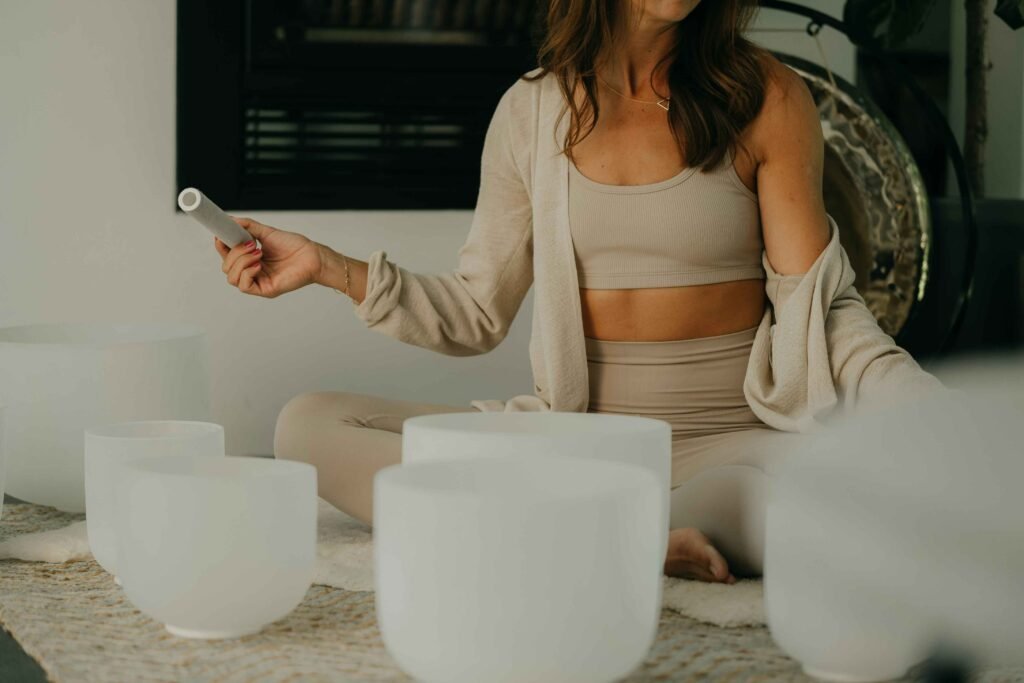
During a live session, the facilitator plays instruments while you sit or lie down. You might hear one ringing tone, several tones together, or even long quiet moments. Some sessions include a little verbal guidance, while others have almost none. The Cleveland Clinic says both live instruments and digital recordings count as sound baths. See their introduction to sound baths.
At home, it’s even simpler. Choose one sound to focus on. Notice when it starts, how it changes, and when it fades away. If your mind wanders to other thoughts, just notice it and return to the sound if you want.
You can keep your eyes open, shift your position, or stop whenever you want. You don’t have to stay perfectly still.
Sound is just one thing you can focus on in meditation. If you prefer words instead of tones, our loving kindness meditation guide offers a practice using short wishes of goodwill.
Is a sound bath the same as music therapy?
No. Listening to a sound bath for wellness is not the same as getting music therapy from a trained therapist. The NCCIH (National Center for Complementary and Integrative Health) makes it clear that music therapy is different from other music activities, including listening to recordings. See the NCCIH music and health overview.
‘Sound healing’ sometimes appears in session descriptions. Take this as a warning to check what the provider really means. Enjoying pleasant sounds does not prove that sound can cure illness or replace medical care.
You can choose a session that is just about listening, with no spiritual content. If a session includes spiritual elements or rituals, the organiser should explain this before you book.
What does the research say about sound bath meditation?
Research on singing bowls is still happening, but so far it doesn’t strongly support the broad health claims often made about sound baths.
A 2025 systematic review identified 19 clinical studies (including nine RCTs). The participants, session formats, comparison groups and outcomes were very different. The reviewers found a high risk of bias in the RCTs and went on to say that this undermines confidence in the findings. See the review by Cai et al.
Some studies found positive changes in well-being or similar areas. This means more research is needed, rather than proof that any recording will improve your health. Results from supervised singing bowl sessions don’t automatically apply to every gong session, home playlist, or digital track.
For everyday use, it’s more helpful to ask: do you enjoy taking a few minutes just to listen? You don’t need to measure any physical changes to decide if this is something you want to add to your routine.
Sound bath meditation is an optional wellness activity, not a substitute for professional care. If you need help with a mental or physical health issue, talk to a qualified healthcare professional for the right support.
Bowls, gongs or chimes? What’s the difference?
The instrument affects the sound, but how it’s played and recorded matters just as much. The same instrument can sound very different when played softly or forcefully.
| Instrument | Sound and playing style | What to listen for in a preview | Practical choice for a first session |
| Metal singing bowl | A ringing tone produced by striking the bowl or rubbing its rim with a suitable mallet | The initial strike, overlapping tones, and how long the ring continues | Try a sparse recording with space between strikes |
| Crystal singing bowl | A sustained tone from a quartz-glass bowl; it can become powerful when played strongly | Whether the sustained sound stays comfortable as it builds | Choose by the actual recording rather than the bowl’s appearance |
| Gong | A broad spread of tones, ranging from a low wash to a much stronger swell | Sudden changes in intensity and large crescendos | Preview beyond the opening before settling in |
| Chimes | Separate ringing notes or clusters; some are used to mark a beginning or ending | Whether the note’s brightness or attack feels pleasant to you | Try occasional notes if a continuous wash feels too busy |
The playing descriptions come from Meinl Sonic Energy’s instrument guide. This is just a comparison of sounds and listening preferences, not a ranking of health benefits or an endorsement of the manufacturer’s therapeutic claims.
If you already have a bowl or chime, just follow its care and playing instructions. You can play one soft sound and let it fade away before playing another. You don’t need a big collection.
How do you go about trying a sound bath at home?
1. Choose audio you can control
Choose a short track with a pause button you can reach easily. Listen to the start and a bit further in, since the intro might be quiet but could get louder. If you can, turn off autoplay so another track or ad doesn’t start unexpectedly.
Don’t pick a recording just because it claims to cure something or promises a “nervous system reset” or special healing frequency. A clear title and a pleasant sound are enough.
2. Set the volume before settling in
Start with a low volume and keep the sound comfortable. Using a speaker lets you listen without anything on your ears. Headphones are optional, not required.
The NCCIH notes that very loud music can harm your hearing, and some music can bring up strong memories or emotions. Louder isn’t always better. See NCCIH’s safety guidance on music.
3. Make the position easy to maintain
Sit in a supported chair or lie down somewhere comfortable. Adjust a cushion or blanket if it helps, and keep the controls nearby. You don’t need candles, incense, darkness, or any special pose.
Choose a time when you can set other things aside safely. Don’t try resting meditation while driving or doing anything that needs your full attention.
4. Follow one feature of the sound
Focus on something specific, like the first note, the faintest sound after a strike, or the silence that follows. Keep your breathing comfortable and don’t try to match it to the recording.
Your mind will likely wander. When it does, just return to the sound or notice the support under your body. You can listen with your eyes open and look around the room whenever you want.
5. Leave room to finish
When the track ends, pause for a moment before standing up. Look around, move your hands and feet, and then decide what to do next. You don’t need to expect any dramatic results.
If you want a short listening break as part of a rest day, our self care Sunday ideas offer other simple options. Listening alone can be your whole break; it doesn’t need to be a long list of activities.
A ten-minute sound bath practice for beginners
Try this listening sequence with a comfortable recording. The timings help guide your attention, but they aren’t a treatment schedule. Read the plan once before you start so you don’t need to check your screen.
| Time | What to do | If it doesn’t feel comfortable |
| 0:00–1:00 | Settle into your seat or lying position. Check the volume and notice the room around you. | Stay seated, keep your eyes open, or lower the volume |
| 1:00–3:00 | Choose one note or layer to follow. Notice how it begins and fades. | Follow ordinary room sounds instead |
| 3:00–7:00 | Continue listening. When you notice a thought, decide whether to return to the sound. | Pause the track or end the session; there is no need to complete the time |
| 7:00–9:00 | Widen your attention to include quiet gaps, your seat, and the space around you. | Look around and name a few objects you can see |
| 9:00–10:00 | Let the practice finish. Move gently, then check whether you feel ready to stand. | Give yourself more time before moving on |
Afterward, you might write a sentence like: “I liked the quiet gaps, the loud strikes were a bit of a distraction.” This can help you next time. Noticing no change in your mood is also a valid observation.
How do you pick a live sound bath?
Before booking, ask about the experience itself:
- Which instruments are going to be played and is it going to be all swells and swells and swells and then a sudden strike?
- Can you sit in a chair, keep your eyes open and just leave whenever you want?
- Where can you sit further away from the instruments?
- Will the facilitator speak to the participants, touch them or place any instruments on them?
- Does the session involve any spiritual practices, incense or other such elements that you’d like to be aware of?
An organiser should be clear about this. You can say no to touch or instrument placement, choose another session, or simply leave. You don’t need any special meditation experience to do so.
When should you stop? When should you go and get advice?
Stop if the sound feels painful, overwhelming, or emotionally upsetting. Pause the audio, open your eyes, and focus on your surroundings. You don’t have to see discomfort as something you must experience.
Meditation isn’t for everyone, and some people report negative effects. The NCCIH says there’s less research on possible harms than on benefits. Meditation shouldn’t replace regular care, and you shouldn’t delay seeing your doctor because of it. See their meditation safety overview.
If you have a hearing condition or are sensitive to sound, get advice from a clinician about how to listen safely. If meditation keeps causing distress, talk to a qualified mental health professional instead of continuing alone.
Sometimes, quiet is best. If you prefer a short activity without a recording, our mindfulness exercises for work breaks offer simple practices like walking or noticing your surroundings. Choose what works for you. You don’t need to do breathing exercises or close your eyes.
Common questions about sound baths
Can a recording work or do you need a live session?
With a recording, you can practice listening and adjust the volume and timing however you like. A live session feels different because of the room and the people. There’s no proof that live sessions are always better than recordings, so choose what feels right for you, what you can access, and what interests you.
Do you require headphones or a specific frequency?
You don’t need special headphones or a certain frequency for this practice. Just use speakers or headphones at a comfortable volume. The sources above don’t show that tracks labeled 432Hz or 528Hz are better for wellness.
What if you get bored or think about something else?
If you get bored, notice it, return your attention to the music, or just stop. Having your mind wander doesn’t mean you picked the wrong recording. If you don’t enjoy the activity, it’s fine to do something else you like.
How often should you do sound bath meditation?
There’s no set schedule for home sound baths. Try a short session and see if you want to do more. Even five minutes is enough, and it still counts as a complete practice.
For your first try, pick a comfortable spot and a recording you can pause easily. The main thing to ask yourself is if you’d like to listen again.
Sources
- Cleveland Clinic: What Is a Sound Bath?
- Cai and colleagues, 2025: Therapeutic effects of singing bowls—a systematic review of clinical studies
- NCCIH: Music and Health—What You Need To Know
- NCCIH: Meditation and Mindfulness—Effectiveness and Safety
- Meinl Sonic Energy: How to Use Sonic Energy Instruments—instrument descriptions only

Hi, I’m Brittany Larsen, a passionate blogger and content creator dedicated to writing meaningful and engaging articles. I specialize in topics like mental health, wellness, and personal development, aiming to inspire and empower my readers through relatable stories and practical advice.